
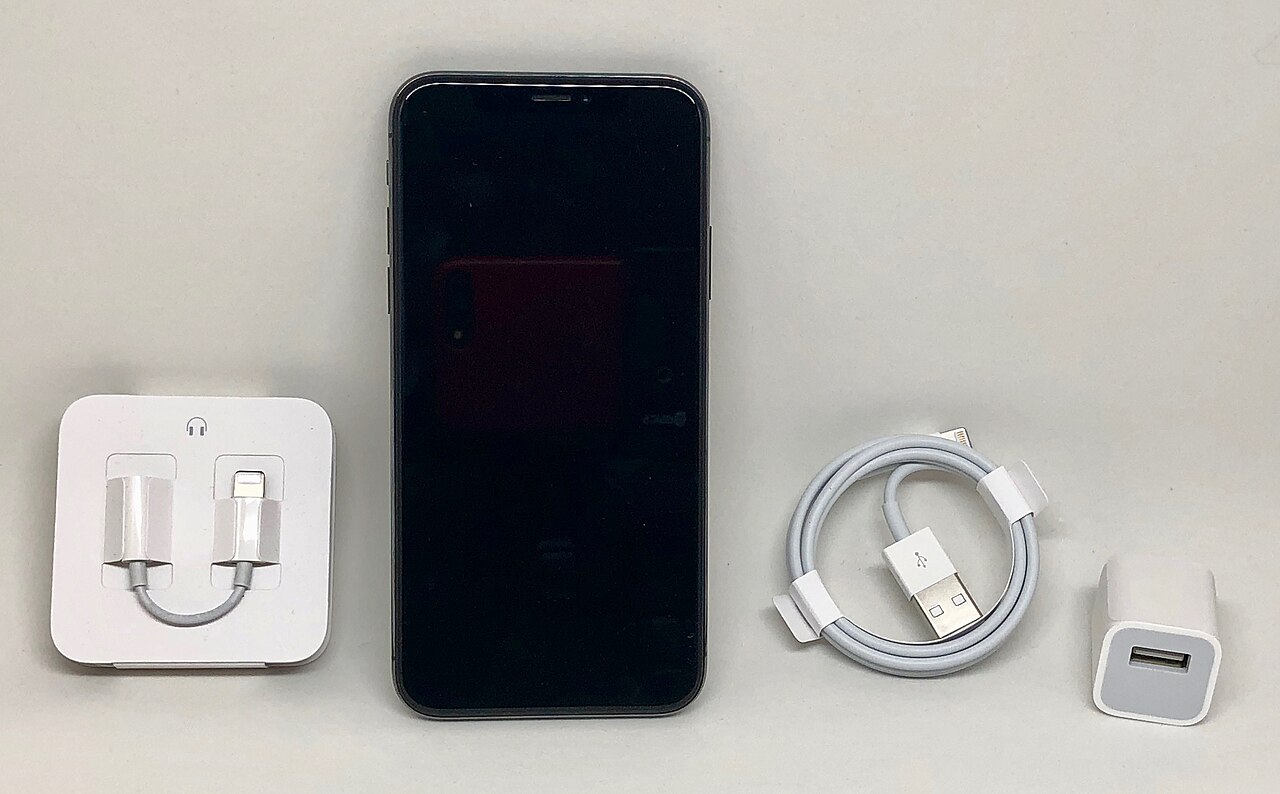
Face ID debuted with the iPhone X in 2017 and replaced Touch ID on most iPhones. It relies on a set of sensors collectively called the TrueDepth camera system, housed in the notch or Dynamic Island area.
When you glance at your phone, a flood illuminator sends out infrared light so the system can detect a face even in darkness. A dot projector then casts a pattern of more than 30,000 invisible infrared dots onto the face, and an infrared camera captures how that pattern is distorted. The distortion encodes the three-dimensional shape of your features.
That depth data is turned into a mathematical representation and compared with the one stored when you enrolled your face. The comparison is done by a neural network running on the device, inside the Secure Enclave, a separate processor designed to protect biometric data. Apple says face data stays on the device and is not sent to its servers or backed up.
The system adapts over time. If you grow a beard, put on glasses or change your hairstyle, it can update the stored model after a successful unlock combined with your passcode. It also checks attention by default: your eyes must be open and looking at the phone, which protects against unlocking while you sleep. This can be turned off for accessibility.
Apple has said the chance of a random person unlocking your phone is about one in a million, compared with roughly one in 50,000 for Touch ID. Identical twins and close relatives are a known weak spot, as are young children whose features are still changing. The passcode remains the fallback and is required after restarts.



0 comments