
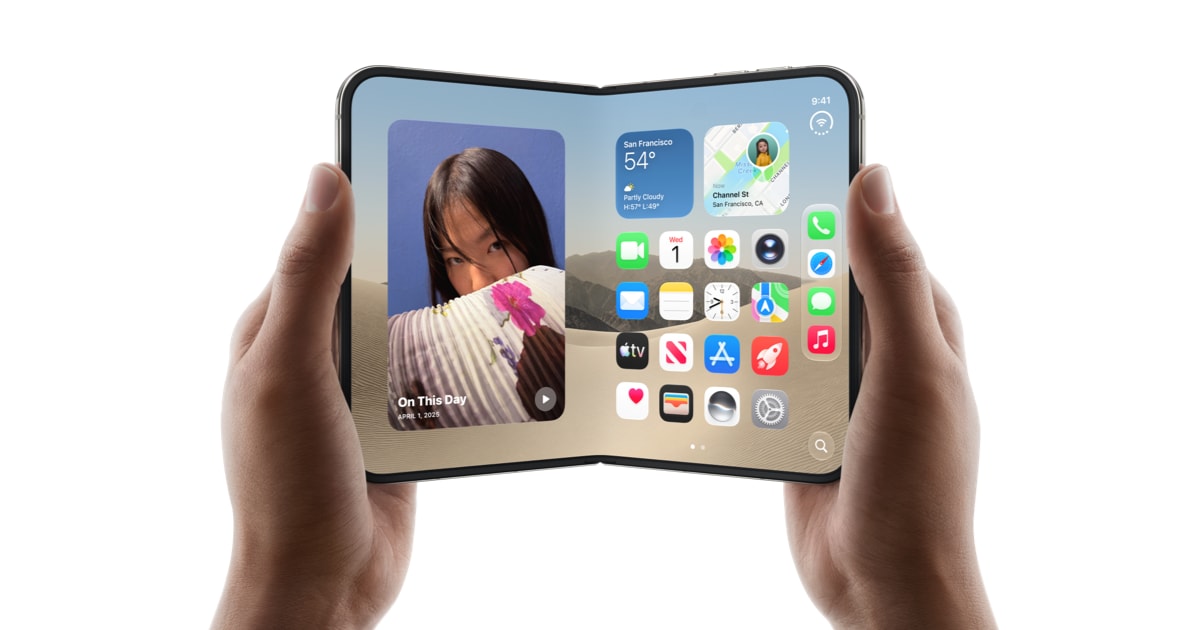
Apple has quietly put a number on the battery inside its first foldable. An EU energy label that Apple published for the iPhone Duo lists a total battery capacity of 4,883 mAh, according to a MacRumors report on Sunday.
The figure matches an earlier leak that described the phone's power as two separate cells, one of 2,962 mAh and one of 1,921 mAh. Added together they come to the 4,883 mAh now printed on the label, which suggests the leaked split was accurate.
Apple does not usually advertise battery capacity in milliamp-hours in its marketing, so regulatory documents like this energy label are often the first place the numbers appear. The label is part of Apple's regulatory information for the device, where the model carries the identifier A3720.
Does it apply outside Europe?
MacRumors notes that the iPhone Duo is eSIM-only. Because there is no SIM-tray version, there is no variant that would need to give up battery space for a physical card slot, so the 4,883 mAh figure should hold in every market where the phone is sold.
How it compares
For context, MacRumors points to iFixit's teardown findings for the eSIM-only iPhone 18 Pro and iPhone 18 Pro Max. The iPhone 18 Pro was found to have a 4,288 mAh battery, while the iPhone 18 Pro Max has a 5,567 mAh cell. On paper, the iPhone Duo's total capacity therefore sits between the two, closer to the larger model's.
A raw capacity figure does not tell the whole story. Battery life depends on the chip, the display and how efficiently the system manages power, and a foldable has two panels and a hinge to account for. Apple has not published its own runtime claims alongside the label in the material reviewed here, and independent testing will be needed to see how the numbers translate into hours of use.
Launch timing
The iPhone Duo goes on sale on October 23, after pre-orders opened on October 16. Apple has described demand as extraordinary, and shipping estimates for new orders have already slipped well into the new year, so many buyers will be waiting a while before they can check the battery for themselves.
Source: MacRumors, citing Apple's EU energy label.


0 comments